Deprecated: mb_convert_encoding(): Handling HTML entities via mbstring is deprecated; use htmlspecialchars, htmlentities, or mb_encode_numericentity/mb_decode_numericentity instead in /home/cardenitservices/public_html/wp-content/themes/hello-elementor-child/functions.php on line 128
How confident are you that visitors to your website are reaching the real destination and not a fraudulent copy?
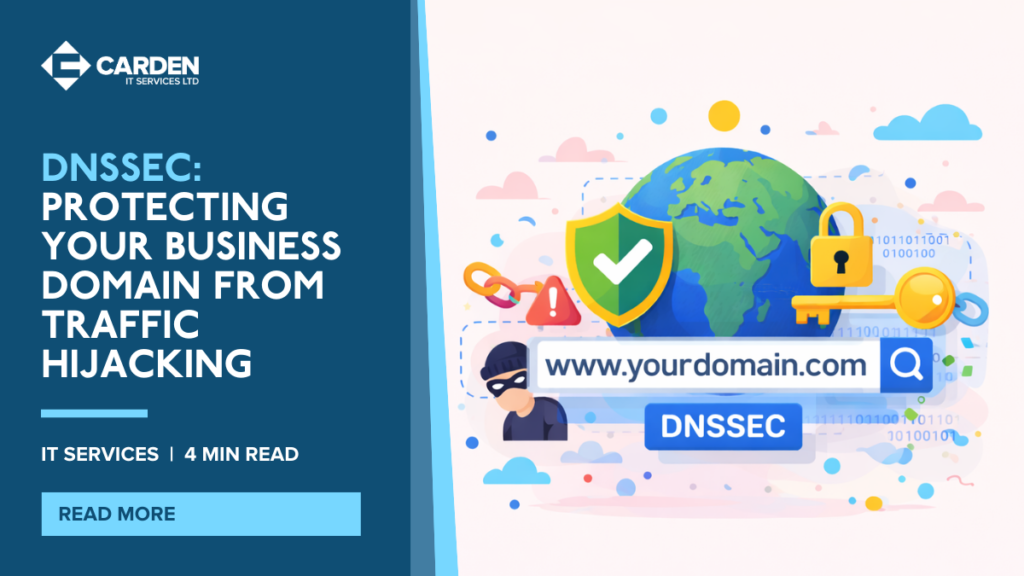
Your domain name is one of your most valuable digital assets. If it is not properly protected, attackers can redirect traffic elsewhere, tricking employees or customers into handing over sensitive information or downloading malware. DNSSEC plays a critical role in preventing this type of attack.
What Is DNSSEC?
DNSSEC stands for Domain Name System Security Extensions. It is a set of security standards designed to protect DNS lookups from being tampered with.
When someone types your domain name into a browser, DNS translates that name into an IP address. DNSSEC ensures that the response received by the browser is genuine and has not been altered by an attacker.
Why Standard DNS Is Not Enough
Traditional DNS was not designed with security in mind. There is no built-in way to verify whether a DNS response has been altered while in transit.
This creates an opportunity for attackers to sit in the middle of the DNS lookup process and:
- Redirect users to fake websites that look legitimate
- Harvest login credentials and personal data
- Distribute malware without the user realising
How DNSSEC Protects Your Domain
DNSSEC adds cryptographic verification to DNS records. Each response is digitally signed, allowing the browser or resolver to confirm that the information has not been modified.
If a malicious system attempts to return a fake DNS response, it will fail verification because it does not have access to the private signing key.
Does My Business Domain Need DNSSEC?
Yes. Any business that relies on its website, email, or online services should treat DNSSEC as a core security requirement.
Although many top-level domains now support DNSSEC, individual domains are often left unsecured due to lack of awareness or technical complexity. Unfortunately, this leaves both businesses and customers exposed.
What DNSSEC Helps Protect Against
| Risk | Without DNSSEC | With DNSSEC |
|---|---|---|
| DNS Spoofing | Users can be redirected to fake websites | Invalid responses are rejected |
| Credential Theft | Users may unknowingly submit login details | Fake sites fail DNS validation |
| Malware Distribution | Attackers can redirect traffic silently | Traffic integrity is preserved |
| Brand Trust | Customer confidence is damaged | Domain authenticity is protected |
Why DNSSEC Adoption Is Still Low
DNSSEC requires correct configuration across domain registrars, DNS providers, and hosting platforms. For many businesses, this complexity becomes a barrier to adoption.
However, failing to implement DNSSEC leaves a critical gap in your web security that attackers are well aware of.
How Carden IT Services Helps Secure Your Domain
At Carden IT Services, we support businesses with domain security as part of our wider cyber-defence services.
Our team can:
- Check whether DNSSEC is already enabled on your domain
- Work with your DNS provider to implement DNSSEC correctly
- Ensure records are signed, validated, and maintained properly
- Reduce the risk of domain-level attacks affecting your users
Protect Your Domain Before It Is Exploited
DNS attacks are often invisible until damage has already been done. DNSSEC helps stop these attacks before users are affected.
If you want to secure your business domain and protect customers from redirection and fraud, contact Carden IT Services today to discuss DNSSEC and your wider web security requirements.